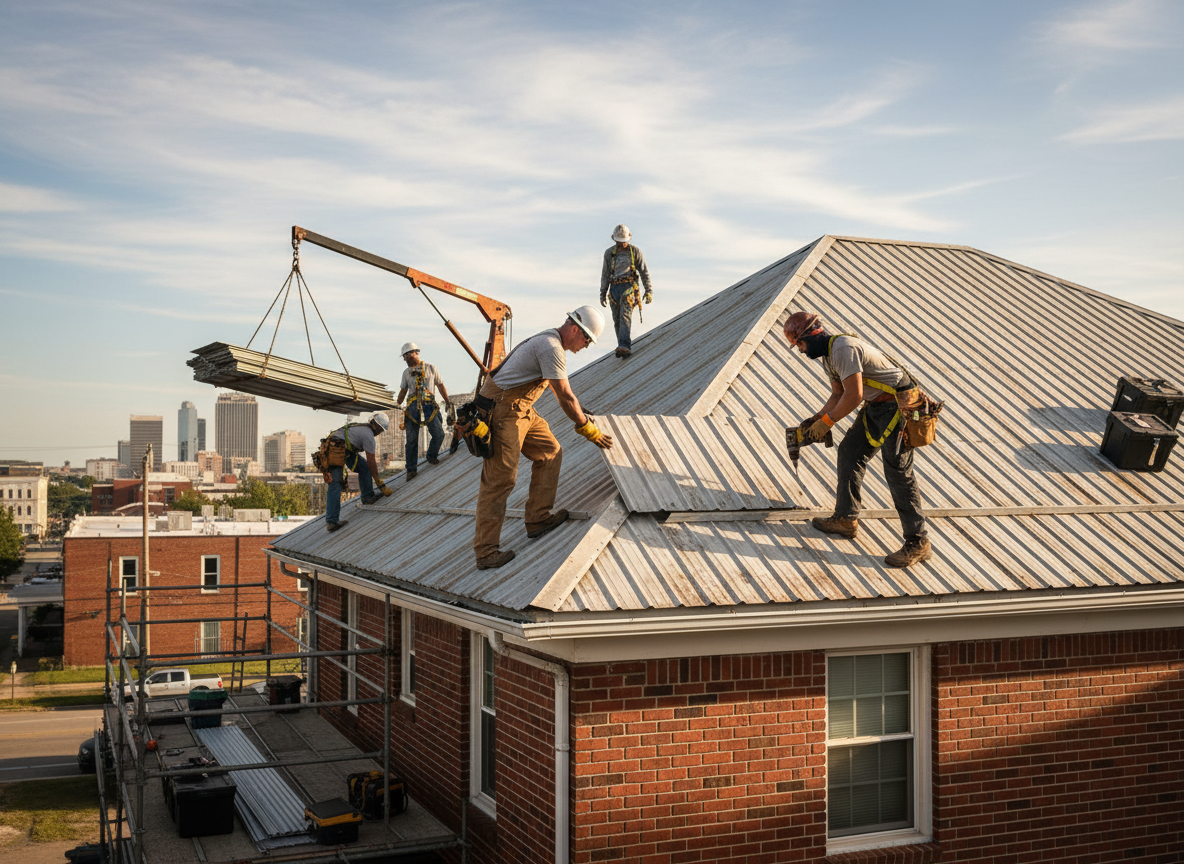
Steel roofing stands up well in Montgomery where homes often sit on gently rolling terrain that can channel runoff toward foundations. Installers must account for the age of many properties built between the 1960s and 1980s, whose rafters may have settled unevenly. Proper underlayment and panel overlap become critical to prevent leaks at valleys and eaves during heavy spring rains.
Choosing the right gauge and coating matters here because Montgomery properties experience both summer heat and occasional winter ice. Galvalume or painted panels with a 40-year finish resist corrosion better than basic galvanized on older roofs near the Little Miami River corridor. Edge trim and ridge vent details also need attention to handle wind-driven moisture common along the county's wooded lots.
Homeowners in Blue Ash and surrounding areas frequently request steel over existing shingles when re-roofing to cut weight and add solar reflectivity. Crews check for hidden rot at decking edges before laying new panels, since many mid-century homes lack modern ventilation. Flashing around chimneys and skylights requires custom bends to match the steeper pitches found on split-levels in the area.
Local building practices in Hamilton County call for specific screw patterns and butyl tape at seams to meet wind uplift standards. Steel contractors also verify that gutters and downspouts can handle the faster shedding of water from metal surfaces, especially on lots where drainage already flows toward neighboring properties.
Technician insight
In Montgomery, the thing that catches most people out with steel roofing contractors is how many 1970s homes in Hamilton County have rafters that settled at different heights, so panels need extra shimming or the seams will telegraph waves after the first freeze-thaw cycle.
Steel panel replacement after ice dam damage
A Montgomery split-level showed water stains along the north eaves after a hard winter. Inspection found ice dams had lifted older shingles and allowed meltwater under the felt. Crews removed the damaged section, added extra underlayment at the eaves, and installed new steel panels with improved ridge venting to reduce future heat buildup.
How it works
- 1
Site Assessment
Measure the existing roof, inspect decking condition, and note drainage paths around the Montgomery property.
- 2
Material Selection
Review panel gauge, color, and coating options suited to Hamilton County weather exposure.
- 3
Preparation
Remove old roofing if needed, repair any soft spots, and install new underlayment and drip edge.
- 4
Panel Installation
Fasten steel panels with proper overlap, seal seams, and flash all penetrations.
- 5
Final Inspection
Check ridge vents, gutters, and trim for secure fit before cleanup.
Pricing
Cost depends on roof size, pitch, and whether existing layers must be removed; request an on-site quote for accurate numbers.