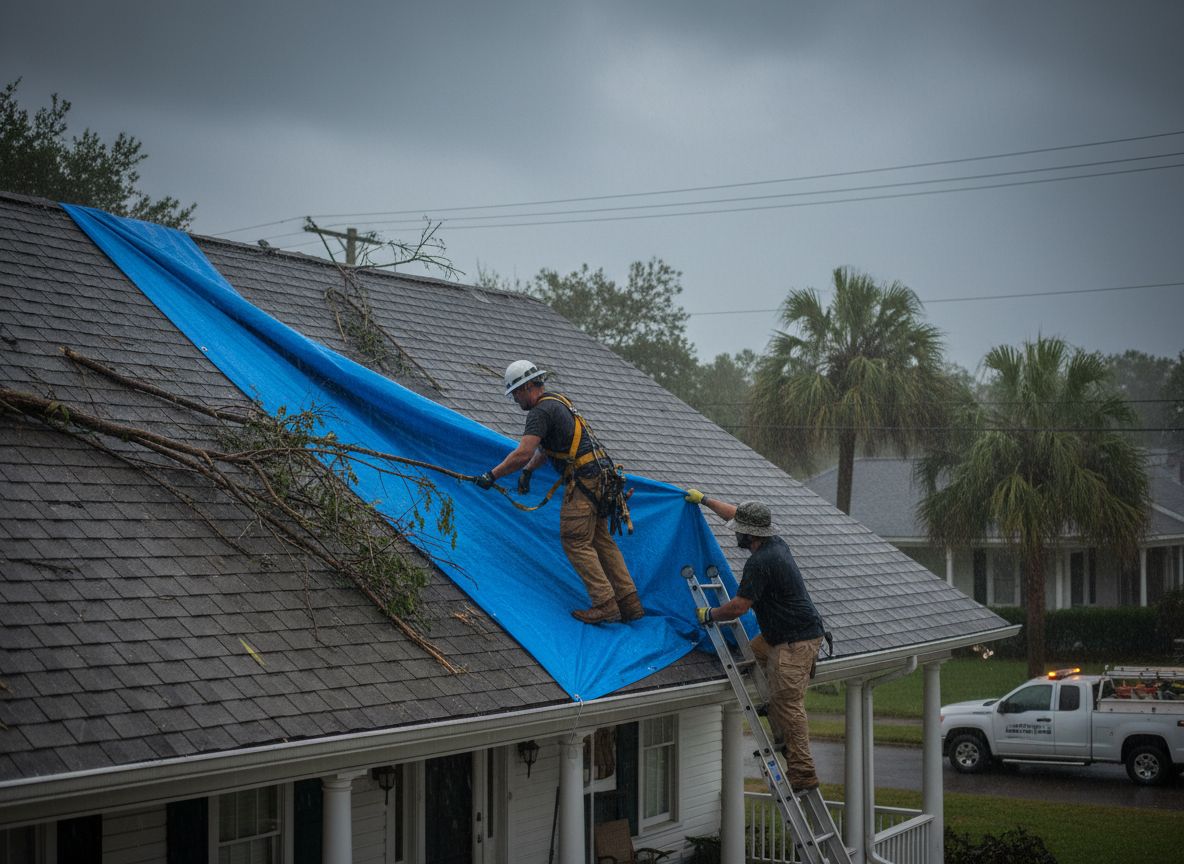
Montgomery's older brick and frame homes often have layered asphalt shingles over original decking that has seen decades of humidity and sudden downpours. When wind-driven rain forces water under flashing or around chimneys, interior ceilings can stain within hours. Corevex Tech technicians carry reinforced tarps, furring strips, and self-adhering underlayment patches sized for quick deployment on steep or low-slope sections common in the city.
Summer thunderstorms and occasional tropical remnants create the most frequent emergency calls. A missing ridge cap or cracked step flashing on a gable end can channel gallons of water into attics before the rain stops. Crews first locate the active leak path from the interior, then work from the exterior to stop water entry without removing sound material that would expose the deck to further weather.
Alabama residential code requires positive drainage and proper flashing at all roof-wall intersections. Emergency work must preserve those details so permanent repairs later meet inspection standards. Homeowners are advised against climbing wet roofs themselves; slick clay tile or granule loss on asphalt makes footing unreliable and can turn a small problem into a liability claim.
Technician insight
In Montgomery, the thing that catches most people out with Emergency roofing service is how fast summer storms dump water through the old ridge vents on 1950s and 1960s ranch homes east of downtown. Homeowners assume a missing shingle is the only issue, but once the underlayment saturates the deck rots quickly in the constant humidity.
High-Wind Shingle Loss
High winds tore shingles from a gable on a Montgomery home near the river. We found the underlayment torn and water already tracking into the attic insulation. Crews applied a full tarp over the exposed section and sealed the edges with compatible tape. The interior stayed dry through the next two rain events until permanent shingles could be installed.
How it works
- 1
Initial Call and Dispatch
Answer within minutes, gather address and damage description, and send the nearest crew from the Montgomery shop.
- 2
On-Site Safety and Assessment
Secure the property, evaluate roof access, and identify active leak points without creating new openings.
- 3
Temporary Containment
Install tarps, seal flashing gaps, or apply quick-set patches to stop water intrusion until permanent repair weather arrives.
- 4
Documentation and Next Steps
Photograph conditions, explain findings to the owner, and schedule follow-up repair once the immediate threat is contained.
Pricing
Emergency response carries a trip charge; full repair costs quoted after inspection with no obligation to proceed.