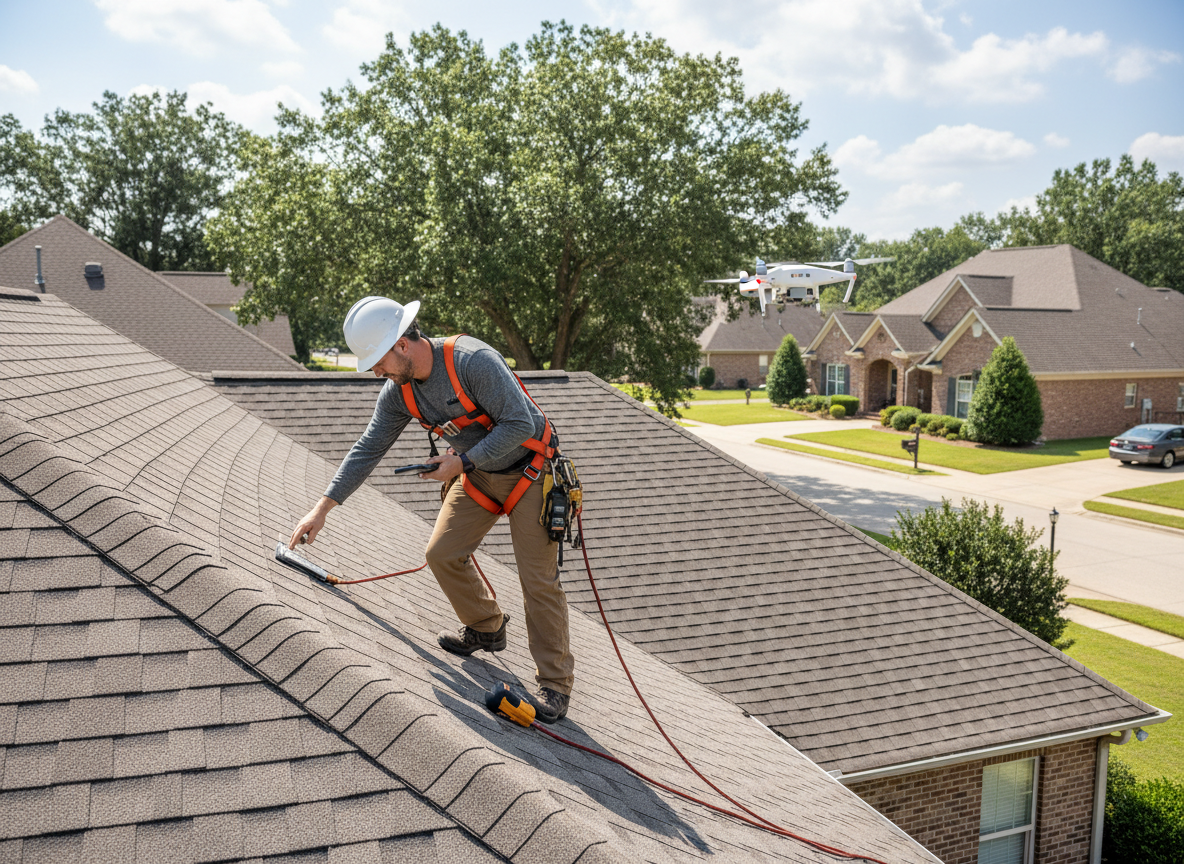
Montgomery homes often feature asphalt shingle roofs installed between the 1960s and 1990s, which means inspectors must look closely at granule loss, curling edges, and nail pops that develop after decades of freeze-thaw cycles. Winter snow loads followed by rapid thaws create ice dams along eaves, especially on the north-facing slopes common in the rolling terrain around Montgomery and Symmes. Checking attic ventilation and insulation levels reveals whether moisture is trapped, a frequent problem in these split-level and ranch-style houses.
Summer thunderstorms bring high winds that can lift shingles at the ridges and valleys, while tree cover in established neighborhoods drops debris that holds moisture against the surface. A proper inspection includes walking the roof when safe, using binoculars for steep pitches, and examining flashing around chimneys and skylights that are often original to the home. Homeowners in Montgomery frequently overlook the condition of drip edges and gutters, which can lead to water intrusion at the fascia if not addressed during the inspection.
Code requirements in Hamilton County call for proper underlayment and ventilation on any re-roofing project, so inspectors note whether existing setups meet current standards. Drone photography helps document hard-to-reach areas without risking damage to older brittle shingles. The final report includes photos, measurements, and prioritized recommendations so owners can plan repairs around seasonal weather windows.
Technician insight
In Montgomery, the thing that catches most people out with Roof inspection services is how quickly ice dam damage hides under the shingles on 1970s ranch homes after just two or three hard winters.
Ice Dam Damage on North Slope
Homeowner in Montgomery noticed water stains near the front windows after spring thaw. Inspection revealed deteriorated underlayment and lifted shingles from repeated ice dams. We documented the affected section, recommended targeted repair before full replacement, and provided a timeline that fit before summer storms arrived.
How it works
- 1
Exterior Walkthrough
Inspect shingles, flashing, vents, and gutters from the ground and roof surface where accessible.
- 2
Attic Evaluation
Check for moisture stains, ventilation adequacy, and insulation condition above the living space.
- 3
Documentation and Report
Capture photos of all findings and compile a written summary with repair priorities.
- 4
Recommendations Review
Discuss findings on site and outline next steps based on roof age and local weather exposure.
Pricing
Most inspections are quoted as a flat fee that varies with roof size, pitch, and access difficulty.