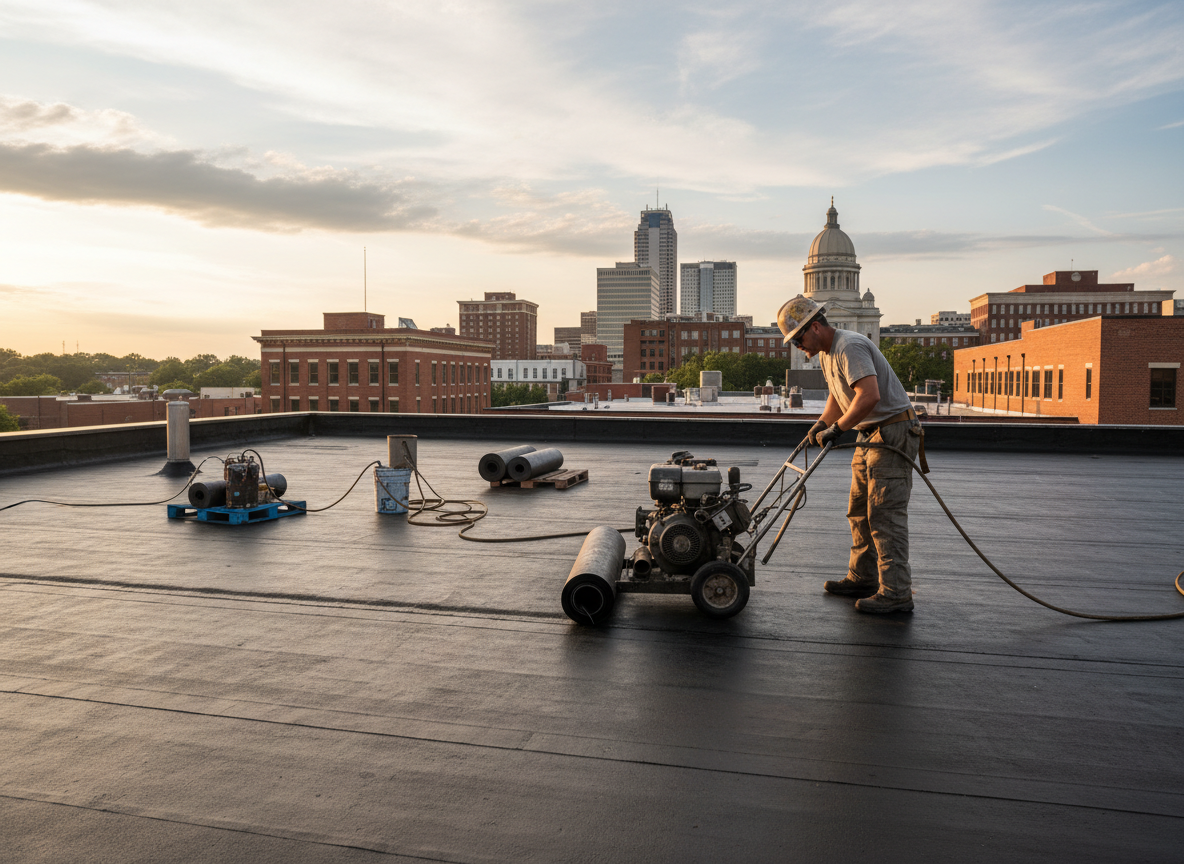
Commercial roofs in Montgomery face intense summer downpours and occasional hail that quickly expose seam failures on TPO and EPDM systems. Older downtown buildings often have built-up asphalt layers that trap moisture against the deck, leading to interior leaks during heavy rains. Corevex Tech inspects for ponding water around HVAC curbs and scuppers before any overlay or replacement work begins.
Montgomery's commercial stock includes single-story retail plazas and two-story offices where roof access is limited by neighboring structures. We route materials through alleys and use cranes only when parapet walls block standard delivery. Drainage redesigns must account for the clay-heavy soil that slows runoff and increases standing water time after storms.
Edge details around skylights and exhaust fans require reinforced flashing because wind-driven rain enters at those points first. We match existing slope and use tapered insulation where needed to meet current code drainage requirements without raising the overall height beyond permit limits.
Technician insight
In Montgomery, the thing that catches most people out with Commercial Roofing is how quickly flat roofs on 1970s-era retail buildings pond water once the original scuppers clog with pine needles from nearby lots. One missed drain line turns a simple overlay into a full tear-off because the deck rots from the underside.
Ponding Water on Jefferson Street Retail Roof
A two-story retail building near 12 W Jefferson St showed repeated interior leaks after summer storms. We found clogged internal drains and failed perimeter flashing from an earlier overlay. We removed the top two layers, installed new tapered insulation to restore slope, and replaced the drains with larger outlets. The owner reported no further leaks through the next rainy season.
How it works
- 1
Site Assessment
We walk the roof during daylight, map all penetrations, and photograph drainage patterns before any work starts.
- 2
Material Selection
We match membrane type to the building's existing slope and HVAC load, then confirm compatibility with local wind and hail exposure.
- 3
Installation
Crews install the new system in sections, maintaining temporary drains so business operations continue uninterrupted.
- 4
Final Inspection
We test all seams and drains, then provide the owner with marked-up drawings showing every repair location.
Pricing
Upfront quotes issued after on-site inspection; final price depends on roof size, existing layers, and drainage modifications required.